
Course DetailsHome / Courses Details
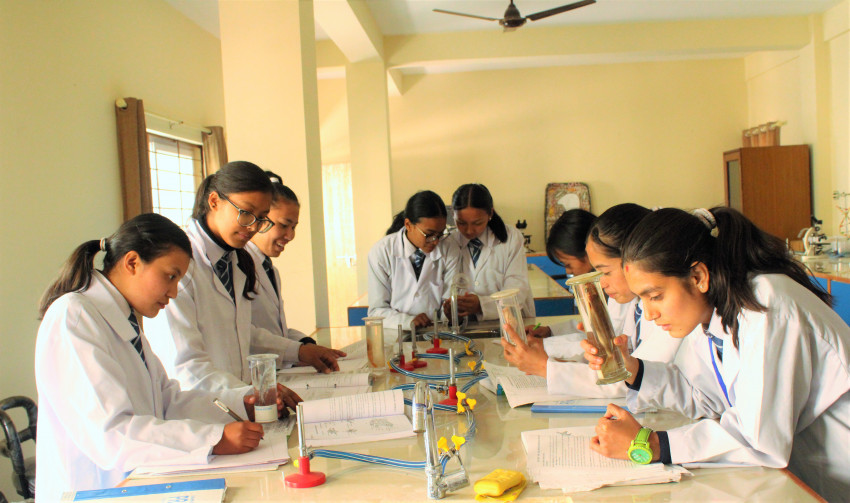
Science
A course for science students typically focuses on imparting scientific knowledge, practical skills, and critical thinking. The course might cover a variety of scientific disciplines such as physics, chemistry, biology, and mathematics, or specialize in one area like environmental science, computer science, or data science.
The primary objective of such a course is to provide students with a solid foundation in scientific principles and techniques while encouraging problem-solving, experimentation, and logical reasoning. The course prepares students for careers in research, healthcare, technology, environmental sciences, engineering, etc.
The curriculum for science students is designed to cover both theoretical and practical aspects of various scientific subjects. Here’s a typical structure:
Introductory Modules
- Overview of Science
- Basic Mathematics for Scientists
- Introduction to Scientific Methods
- Research Techniques
Core Modules
- Physics (Mechanics, Thermodynamics, Optics, etc.)
- Chemistry (Organic, Inorganic, Physical Chemistry)
- Biology (Genetics, Ecology, Cell Biology, etc.)
- Computer Science/Mathematics (Programming, Algorithms, Data Structures, etc.)
Specialized/Advanced Modules
- Environmental Science
- Artificial Intelligence & Machine Learning (for tech-focused students)
- Organic Chemistry or Biochemistry (for chemistry-focused students)
- Biotechnology or Biomedical Science (for biology-focused students)
Laboratory Work and Practical Sessions
- Laboratory experiments in chemistry, physics, and biology
- Practical projects related to technology (coding, robotics, etc.)
Research and Thesis
- Research projects where students apply their knowledge to solve real-world problems
- Writing and presenting a scientific paper or thesis
The instructors for such courses are typically experienced professionals with advanced degrees (usually a Ph.D. or Master's) in the subject area. Instructors may include:
- University Professors with academic and research experience in their field
- Industry Professionals (in some applied science courses like data science, environmental science, etc.)
- Guest Lecturers or Experts for specialized topics (such as renowned researchers or professionals working in cutting-edge fields)
Course reviews provide valuable insights into the effectiveness of the program. Typically, students evaluate courses based on:
- Content Quality: How comprehensive and up-to-date the curriculum is.
- Instructor Expertise: The knowledge, teaching methods, and accessibility of the instructor.
- Practical Application: How well the course provides hands-on experiences through labs, projects, or fieldwork.
- Career Opportunities: Whether the course offers opportunities for career advancement or prepares students for specific professions.
- Student Satisfaction: The general student experience in terms of workload, support, and engagement.
For example, if it’s a physics-focused course, students might comment on how well the instructors explain complex theories or the quality of lab experiments. A tech-focused course might be evaluated based on coding workshops or projects that mirror real-world challenges.

S1chool Management Software simplifies school tasks, allowing teachers to manage attendance and grades efficiently. By streamlining their work, teachers can focus more on helping students succeed.